

Remembering Congressman Bill Archer: Character, Leadership, and Legacy: A Daily Texan Interview with Don Carlson, Co-Founder of the Archer Center
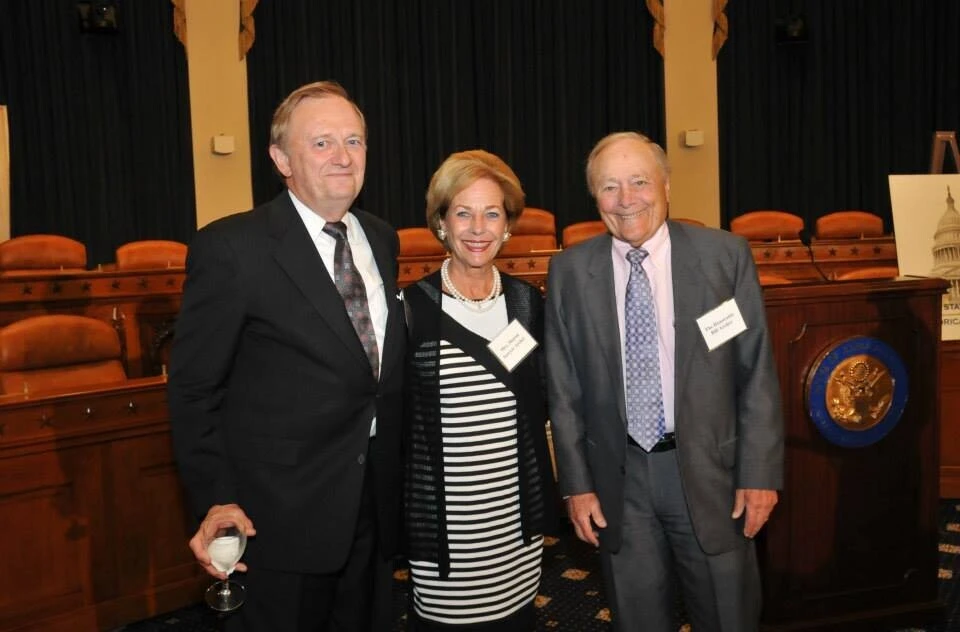
What was it like meeting Congressman Archer for the first time?
I first met Congressman Archer in the spring of 1971, during his third month in office. One of his original staff members from Houston had decided that Washington, D.C., wasn't for them, and I became the first new person hired by the office. As it turned out, I stayed for the remainder of Archer’s 30 years in the House. At the time, I had worked for two Michigan congressmen while earning my degree in international relations at American University and had recently completed active duty in the Marine Corps. After interviewing with the office manager, I was escorted into Congressman Archer's office to meet him. What struck me immediately was how approachable and down-to-earth he was. Rather than focus on my résumé, he seemed genuinely interested in me, my family, and my background. Since I wasn't from Texas, I thought that might be a concern, but he dismissed it entirely. Instead, he looked at me and said, “Don, you look like someone who learns fast — and might stay longer than the guy you replaced.” That turned out to be remarkably prophetic. Looking back, that first meeting reflected the qualities I would come to know well over the next 30 years: his interest in people, his good judgment, and his ability to recognize potential in others.
Did he have any habits or behaviors staffers used to lovingly joke about, like a phrase or a ritual before a big hearing?
One characteristic that staff members often joked about — always affectionately — was Congressman Archer’s legendary frugality. It was a defining trait in both his personal and public life. He took great pride in running an efficient office and routinely returned unused funds from his congressional office budget to the Treasury each year. His commitment to fiscal responsibility became especially evident when he became chairman of the House Ways and Means Committee in 1995. On his first day as chairman, he reduced the committee staff by one-third, cut expenses, and gave up office space that was no longer needed. The savings were so significant that Speaker Newt Gingrich encouraged other committee chairmen to follow Archer's example. Staff members came to expect that Archer would always ask whether money was being spent wisely and whether there was a more efficient way to accomplish a task. While his frugality became a running joke around the office, it was also something people respected because it reflected the same principles he advocated in public service. In many ways, it stemmed from the values instilled by his Depression-era upbringing and the practical traditions of his German, English, and Scottish immigrant ancestors.
How did he like to spend his time outside of work?
One of the greatest challenges for any member of Congress is balancing public responsibilities with family life. Congressman Archer always tried to make his wife and five children his highest priority. Unlike many members of Congress today, he moved his family to the Washington area after his election because he believed it would allow him to spend more time with them and be home with his family each evening.
Outside of work, he was a lifelong sports enthusiast. During his time at UT, he was an outstanding intramural athlete, and he remained committed to staying active throughout his life. He exercised regularly, enjoyed playing golf, and closely followed a variety of sports...always cheering on his beloved Longhorns.
His greatest athletic passion, however, was tennis. He played throughout his life, was on the varsity tennis team at UT, and remained an avid player into his seventies. Tennis also became a source of friendship and camaraderie with former President George H.W. Bush, who shared his love of the game. Congressman Archer especially enjoyed the opportunity to play tennis with President Bush at the White House.
Above all, when he was away from his official duties, he valued time with family, friends, and the relationships he had built over a lifetime of public service.
What do you think he was proudest of in his career?
Congressman Archer would point to two accomplishments that gave him the greatest pride.
The first was his service as chairman of the House Ways and Means Committee and the policy achievements that came during that period. Above all, he was proud of helping achieve a balanced federal budget for the first time in nearly 40 years. He also took great satisfaction in welfare and healthcare reforms, including working closely with President Bill Clinton on legislation that strengthened and extended the life of Medicare. Regardless of one's views on the policy debates, he saw these efforts as opportunities to improve people's lives and strengthen the nation’s long-term prosperity.
The second was more personal. As he reflected on his career before retiring from Congress, he often said he was proud that he had never publicly attacked a congressional colleague or political opponent. He believed political disagreements should not become personal and that elected officials could disagree strongly on issues while still treating one another with respect.
Looking back, I think he would have viewed both of those achievements as connected. He was proud not only of what he accomplished, but also of how he conducted himself in public life.
On a more personal level, I know he would want me to mention one of the honors he cherished most: receiving The University of Texas at Austin’s Distinguished Alumnus Award in 1981. As a proud Longhorn who earned both his undergraduate and law degrees from UT, he was especially touched to be recognized by the institution that helped shape his life and career. His connection to the University remained strong throughout his life, and this honor always held a special place in his heart.
What is a specific moment where you saw his integrity in action?
A specific moment that showed Congressman Archer’s integrity came in 1983, during negotiations over the federal budget. President Ronald Reagan had reached a budget agreement with Congress, including Democratic leaders in the House, but the plan still included a $200 million deficit. At the time, that was an enormous amount of money, and Congressman Archer believed a deficit of that size was unconscionable. Even after President Reagan personally called him and urged him to support the deal, along with most of the Republican leadership in Congress, Archer refused. He respectfully but firmly said he could not vote for a budget that violated his principles. As a result, negotiators went back to the table and ultimately cut the deficit in half, reducing it to $100 million. Only then did Congressman Archer agree to support the plan. That moment speaks volumes about his character. He was willing to stand on principle, even when it meant opposing his own party’s leadership and resisting pressure from the White House. It was not the only time in his career that he took a principled stand, but it remains a clear example of his integrity, independence, and commitment to fiscal responsibility.
Did Congressman Archer author the ‘Archer Rule?'
Congressman Archer did not personally coin what became known as the “Archer Rule.” His colleagues in the Texas congressional delegation gave it that name because, as the delegation's longtime dean, Archer consistently emphasized that one of the Texas congressional delegation’s greatest strengths in Congress was its ability to work together across political and ideological differences on issues important to the state.
He often advised colleagues that publicly attacking fellow members of the Texas delegation — or campaigning against them — made that kind of cooperation much more difficult. In his view, disagreements were inevitable, but maintaining respectful relationships was essential if members hoped to effectively serve Texas.
Archer practiced what he preached. Even when he disagreed with his Democratic colleagues, he avoided speaking ill of them publicly and worked to maintain constructive relationships across party lines. While not everyone interpreted or followed the “Archer Rule” to the same extent, he remained committed to the principle throughout his career.
More broadly, the rule reflected his belief that lasting results in public service depend on civility, mutual respect, and the ability to work with people who may hold different political views.
When Congressman Archer became frustrated because of work, what did he do?
During his first 24 years in Congress, when he was part of the minority party in the U.S. House, frustration was often a part of the job. He frequently saw worthwhile amendments and proposals defeated on party-line votes, even when they had clear merit. Rather than dwell on those setbacks, Archer's response was consistent: “Let's move on — what is the next issue we have to deal with?” He focused on finding other paths forward, often working with allies in the Senate or calling Texas senators from either party to build support for important issues. His approach to frustration was to stay focused on solutions and keep moving forward.
Was there a moment his actions surprised you, and did something that you did not expect that was good or astonishing?
Congressman Archer rarely surprised me with his actions or votes because he was remarkably consistent in applying his personal philosophy to every issue and decision. One example stands out from 1996, after President Clinton was reelected. At the time, Archer was chairman of the House Ways and Means Committee and knew he had only four years left in that role because of Republican-imposed term limits. Rather than focus on political differences, he decided to reach out to President Clinton, with whom he had not yet developed a close working relationship. He requested a meeting at the White House during the winter holidays to explore whether they could find areas of common ground. During that meeting, they developed a personal rapport and identified several issues on which they could work together. What surprised me was not Archer’s willingness to reach across party lines — that was consistent with his practical approach to governing — but the results. The relationship they built led to productive cooperation over the following years. It demonstrated Archer's belief that effective leadership often means finding ways to work with people who may not share your political views.
How did he treat his junior staff throughout the years?
Congressman Archer always treated his staff with respect and courtesy, regardless of their position or level of experience. He never asked staff members to handle personal errands and made himself accessible to everyone in the office. He genuinely enjoyed getting to know younger staff members, many of whom were just beginning their careers after college. He often asked about their future plans and was happy to offer advice when asked. Most junior staff members stayed in the office for two or three years before pursuing other careers, graduate school, or law school. He took great pride in seeing them succeed and was especially gratified that so many stayed in touch with him long after they left. His interest in their professional growth reflected the value he placed on mentorship and treating people with respect. Those same values shaped his engagement with Archer Fellows over the past twenty-five years.
When the idea to create the Archer Center arose, what conversation brought it about? Why did you two decide to start the Archer Center together after he retired?
After the 1994 election, when Congressman Archer became chairman of the House Ways and Means Committee, we began thinking about how he might continue serving students after his time in Congress. One idea we returned to often was creating a Washington, D.C., internship program for University of Texas students.
Chairman Archer believed UT students would benefit from a semester in Washington that combined hands-on academic coursework with full-time professional internships. Because his responsibilities as committee chairman left little time to develop the idea himself, he asked me to lead the effort.
Over the next several years, I worked with UT leaders to establish what became the Archer Fellowship Program. From the beginning, we wanted the program to be open to students across the UT System. We wanted students to receive full academic credit for their semester in Washington, so the opportunity would not be limited only to those who could afford to step away from their normal studies. We also wanted the program to offer full-time internships in a wide range of professional environments unique to Washington, not just the Capitol Hill internships that many other schools offered.
It took nearly three years to build support and secure approval for the program. Chairman Archer and I helped raise the initial endowment, and the first class of Archer Fellows arrived in Washington in the spring of 2001 as he retired from Congress.
What began with ten UT Austin students in spring 2001 has since grown into a systemwide opportunity serving students from academic and health institutions across the UT System, fulfilling Chairman Archer’s vision of giving talented Texas students firsthand experience in the nation’s capital.
What did Congressman Archer want the Center to be at the time of its formation that took years to become real?
From the beginning, one of Congressman Archer’s most important goals was for the program to serve students across the entire UT System. He believed students from every UT institution should have access to the opportunity to live, learn, and work in Washington, D.C.
He was also especially interested in creating opportunities for students pursuing medical and health-related careers to learn firsthand about the policies that shape their professions and affect the lives of millions of Americans. While the original Archer Fellowship focused on undergraduates, he envisioned a broader program that would eventually include graduate, law, doctoral, and medical students, exposing them to the policymaking process in healthcare and other critical areas.
That vision took years to fully realize. In 2010, the Archer Center expanded beyond the undergraduate Archer Fellowship Program to launch the Graduate Archer Fellowship Program, serving graduate, doctoral, law, and medical students from across the UT System each summer. The program now includes a dedicated track for students interested in health and healthcare policy, reflecting a key element of Congressman Archer’s original vision.
I share his pride that the Archer Fellowship has become a truly systemwide opportunity serving students from academic and health institutions across Texas and a wide range of disciplines. The program's growth has fulfilled his belief that students from every corner of the UT System should have access to transformative experiences in Washington and the opportunity to engage directly with the issues shaping the nation’s future.
We both had the opportunity to see the impact of that vision at the Archer Center’s 25th Anniversary Celebration in April, where we recognized and celebrated more than 2,200 Archer Fellows. For Congressman Archer, those students and alumni represent the clearest evidence that the program had become what he had envisioned from the very beginning.
He started a high school intern program his first year in Congress. Did he talk about why he thought it is important that youth enter policy roles?
Congressman Archer launched his high school internship program during his first term in Congress. He often said the idea grew out of his first congressional campaign in 1970, when he encountered a deep skepticism among many youth about their future and whether their voices could make a difference. The Vietnam War era had left many students feeling disconnected from public life and government.
He believed it was important for future generations to become engaged in public affairs and public service because they would ultimately help shape the society in which they — and their children — would live. He viewed internships and other opportunities for civic engagement as ways to help students better understand government and recognize that they could play a meaningful role in the policymaking process.
Education and youth engagement remained important priorities throughout his career. Whenever he returned to his Houston district, we had a standing office practice of scheduling at least one school visit. He genuinely enjoyed speaking with students and often said those conversations were especially rewarding because young people were still forming their views and thinking critically about the issues facing the country.
On the rare trips when a school visit was not possible, it was often one of the first things he mentioned when he returned to Washington. His consistent interest in engaging students reflected his belief that encouraging the next generation of leaders was an important part of public service.
When did you last speak to him, and what did you talk about?
I spoke with Congressman Archer during the week before he passed away. In more than 50 years of working together, it was rare for a week to go by without some form of communication between us.
I called both to catch up and to share the sad news that one of his longtime supporters in Houston had passed away. Congressman Archer immediately remembered her and began recalling details from his early congressional campaigns. He built a remarkable volunteer organization in those years and often won elections despite being significantly outspent by his opponents. What always amazed people was his ability to remember those who had helped him, along with specific details about their contributions, even decades later.
I had planned to travel to Houston to speak on his behalf at her funeral. Sadly, Congressman Archer’s passing occurred before I could make that trip, so I instead sent written remarks to be shared at the service.
That final conversation reflected one of his most enduring qualities: his deep appreciation for the people who supported him throughout his life and career, and his remarkable memory for the relationships he built along the way.
What is something you have not seen in obituaries written about him that you want to see?
I have actually appreciated much of the commentary that has appeared in both the Texas and national press. Many of the tributes have gone beyond recounting Congressman Archer’s legislative accomplishments and have highlighted the personal qualities that defined him — his character, kindness, humility, and genuine interest in other people. Those are qualities that can sometimes be overlooked when covering a public career of such length and significance.
What I would most like people to understand is the extraordinary impact he had on individuals. Since his passing, his family and I have received hundreds of messages from people whose lives were enriched by knowing Bill Archer, working with him, or benefiting from opportunities he helped create. Those personal stories reflect a legacy that extends well beyond public office. While his accomplishments in Congress were considerable, the relationships he built and the people he mentored are an equally important part of how he should be remembered.
What would you want UT students who never knew Congressman Archer to understand specifically about him?
Congressman Archer would want UT students to understand that public service begins with character. He tried to live his life according to the values instilled in him by his parents, his family, and his faith, and he believed that integrity mattered as much as achievement.
He also believed deeply in each generation's responsibility to preserve and strengthen the opportunities and freedoms it inherits. That belief shaped his career in Congress, his commitment to mentoring young people, and ultimately his support for what became the Archer Fellowship Program.
For students who never knew him, I think the most important thing to understand is that he genuinely believed young people could make a difference. He invested in students because he saw them not simply as future leaders, but as individuals whose ideas, talents, and commitment to service could help shape the future of the country.